

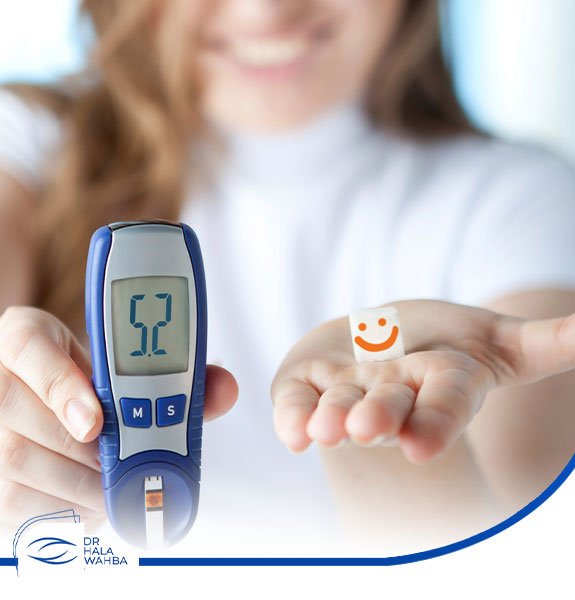
Diabetic retinopathy is an eye complication caused by diabetes, a disease that affects the body’s ability to control blood sugar levels. The retina is very sensitive to this fluctuation in sugar levels.
Diabetic retinopathy results from a deterioration in the structure of the retinal blood vessels. These diseased blood vessels may expand, causing fluid to leak and even block, leaving part of the retina without blood circulation. As the disease progresses, new blood vessels form and fibrous tissue proliferates in the retina, resulting in deterioration of vision.
When a diabetic also has other risk factors such as high blood pressure, obesity, high cholesterol or smoking, the risk of eye complications becomes double. This is the reason why a diabetic patient must be serious and even disciplined with regard to diet, weight control, and avoidance of smoking.
Symptoms
Diabetic retinopathy leads to a gradual decrease in vision due to macular edema secondary to diabetic retinopathy. Macular edema is swelling and fluid buildup in the retina that occurs when fluid leaks from the blood vessels in the retina, resulting in a decrease in central vision. Edema is usually painless and can have few symptoms in the first place, primarily blurred vision and discoloration of visible objects, but it must be dealt with in time to prevent irreversible degenerative changes.
Sometimes, the disease begins with severe bleeding inside the eye, which leads to the sudden appearance of floaters that may partially or completely obscure the vision.
Many people who suffer from diabetic retinopathy in its early stages do not complain of clinical symptoms, knowing that retinopathy in these cases does not stop developing and progressing until it leads to complications gradually. That is why all those suffering from diabetes should have regular check-ups to prevent avoidable complications in time.
what is the cure?
It is necessary to perform a comprehensive examination that includes the following tests: retinal imaging, optical coherence tomography (OCT), fluorescein angiography, unless the patient is allergic to fluorescein dye, and visual field mapping.
Patients with diabetic retinopathy in its early stages may not need any treatment.
Patients with mild diabetic macular edema that do not cause any symptoms should only have regular check-ups. In other, more advanced cases, it may be necessary to inject the eye with an antiangiogenic drug, a slow-release cortisone derivative, or a combination of both, to control diabetic edema, to restore vision loss, and to prevent vision loss due to irreversible degenerative changes. It affects the thin layers of cells that make up the retina of the eye. On very specific occasions it may be advisable to use laser photocoagulation near the macular selectively to eliminate microscopic aneurysms and thus to reduce diabetic edema.
When the disease shows signs of progressing to the proliferative forms, more extensive photocoagulation is required to treat those areas of the retina that have lost blood flow (ischemia) to prevent the disease from progressing to its more severe forms with severe complications. Failure to do the treatment for fear of the laser (some patients complain of this), is a serious mistake that may lead to irreversible changes in the retinal tissue.
In advanced cases, intraocular hemorrhage and/or retinal detachment, it is necessary to use advanced eye surgery techniques performed under local anaesthesia. Laser and microsurgical techniques are very effective in the treatment of diabetic retinopathy, allowing us to offer solutions for intractable cases. However, it is better through prevention that we do not reach such advanced cases of the disease.
protection
Anyone affected by diabetes should closely monitor their general health, in addition to regular eye reviews, even if they do not show symptoms of the disease. Prevention and early diagnosis improve the visual prognosis of the disease. Today, in most patients, access to severe advanced cases can be avoided. However, it is essential to keep up with regular check-ups. Diabetes is one of the few diseases in which if regular checks are taken, the effect of prevention is very effective.